
Where & When
Northern lights in Norway: choose a viewing base
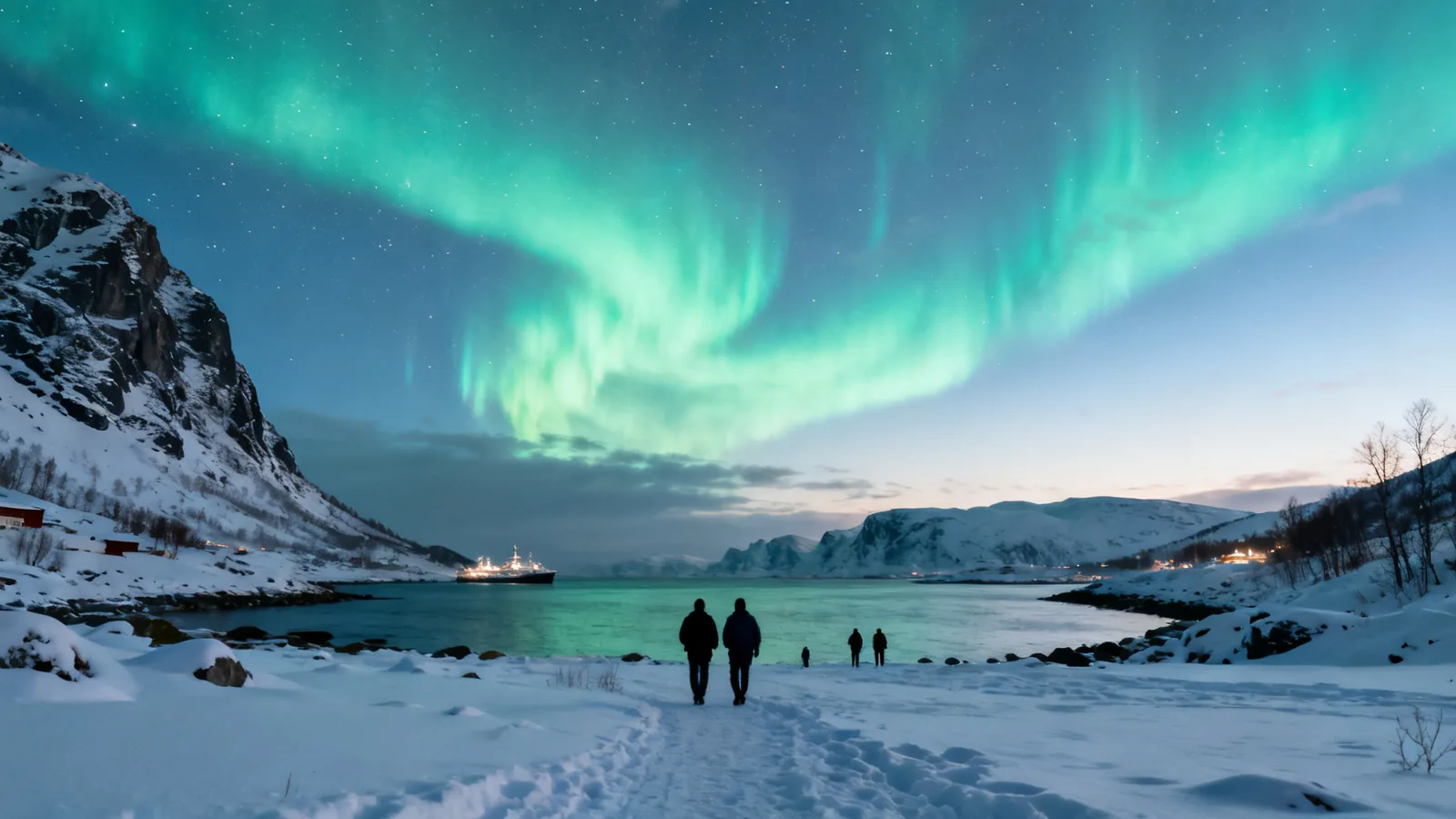
The short answer
Choose northern Norway when aurora is the holiday’s main purpose, then fit the base to transport, accommodation and evening format. Southern cities can be useful stops with occasional viewing opportunities. Darkness, clear sky and natural activity remain separate requirements.
Last updated October 2026
What's covered12
Norway northern lights planning starts with the place you can use as a base. A city with evening pickups, an island village and a guided Arctic stay create different holidays. Choose the place from the journey and daily experience you want, then compare dates and outings.
Choose northern Norway when aurora is the holiday’s main purpose, then fit the base to transport, accommodation and evening format. Southern cities can be useful stops with occasional viewing opportunities. Darkness, clear sky and natural activity remain separate requirements.
Do not start with a promise that one town or month will deliver a display. Plan the dark season, current sky and access together. None supplies the whole answer alone. Even a well-matched trip can finish without aurora.
Where to base your trip
| Base | Useful when | Practical decision | Limitation |
|---|---|---|---|
| Tromsø | A city stay with several outing formats appeals | Arrival, hotel area and tour pickup | City weather does not describe every excursion stop |
| Alta | A town or lodge-centred northern stay fits | Airport transfer and exact accommodation | A rural room cannot move around cloud |
| Lofoten | The islands and winter village setting matter | Which base, gateway and evening transport | A regional label hides several distinct journeys |
| Sommarøy | A coastal stay near the Tromsø region appeals | Both transfer directions and city pickup boundaries | It is outside the central hotel area |
| Longyearbyen, Svalbard | The guided Arctic and dark-season experience is wanted | Arrival documentation, local guide and operating dates | Leaving the settlement requires local arrangements |
| Oslo, Bergen or Trondheim | A city visit is central or part of onward travel | Conditional local evening or northern journey | Do not build an aurora promise around the city stay |
Scroll for more →
The rows are place branches, not a league table of sightings. Choose the fit of the whole trip. Keep the experiences you would value under any sky.
Northern and southern destinations
Visit Norway's aurora information focuses on northern places and seasonal darkness. Checked October 2026. That framing supports a northern aurora base. It gives no sighting probability for one town.
Southern city visits can still make sense. VisitOSLO presents a stop en route north. It acknowledges possible local viewing too. A possible local evening differs from selecting the place mainly for aurora.
Count the onward journey honestly if combining cities. A southern stop can add culture and a useful travel stage. It also uses time otherwise spent at the northern base. Decide whether that stop is wanted in its own right.
Location context
This is a place relationship key, not a road map. It helps distinguish the geographic choices before you search transport:
- Southern and central city stages: Oslo, Bergen and Trondheim belong to different city journeys rather than one interchangeable airport arrival.
- Northern mainland and islands: Tromsø, Alta and Lofoten each need their own airport, road or coastal approach.
- Coastal stay within the Tromsø region: Sommarøy needs a separate transfer from the central city or airport.
- Arctic archipelago: Svalbard is beyond the mainland; Longyearbyen's arrival and guided-access context differs from the mainland bases.
The place guides below explain those journeys with named official sources. Do not infer through transport from the order in this list.
Darkness, cloud and auroral activity
The broad dark season is a first filter. Bright northern summer nights are a poor fit for ordinary visible aurora. Choose that season for its other interests. Near the season's edges, the date matters more than a broad month label.
Cloud is a second filter. A dark night can still have no view of the sky. Check Yr for the intended location rather than using a country-wide climate statement.
Natural activity is another question. NOAA SWPC's short-term aurora forecast supplies that context. The local forecast addresses weather. A forecast map does not settle ground access, tour operation or a sighting.
Do not combine these inputs into an invented success percentage. They inform where, when and how to attempt viewing. They leave the outcome uncertain.
Independent viewing versus a guided trip
Viewing on your own can fit a known lawful setting. Check current sky and the return from it. Avoid turning a dark-sky search into an unsourced night hike or an improvised roadside stop.
A guided road chase can handle its stated transport and route choices. A fixed camp supplies a different setting and a boat follows a marine route. Compare those formats by pickup, shelter and guest rules.
Svalbard has a distinct boundary. Longyearbyen's community guidance directs visitors to use a local guide beyond the settlement. Do not treat that branch as a usual mainland independent outing.
For the purchase choice, use the Norway tour-format selector. It separates an evening trip, full holiday and voyage. Each route then leads to its own comparison.
Season and arrival planning
The best-time guide compares the seasonal trade-offs. For Tromsø, the weather reference retains units, station and period. It separates climate from the current forecast.
Choose the actual arrival date for transport. A static route diagram cannot settle the service. Airports, road connections and coastal calls need their current operator records. Rail does not reach Tromsø. A rail-led plan needs another final mode.
Avoid booking a viewing departure tightly after a predicted arrival. Leaving the airport, reaching the room and finding pickup are part of the evening plan. Check how a delayed first journey affects a separately purchased activity.
Destination guides
For a city base, read Tromsø or Alta. For the islands, use Lofoten's base and access guide. For a coastal stay rather than a central room, compare Sommarøy.
The Svalbard guide explains Longyearbyen and local guided access. Southern city questions have their own answers for Oslo, Bergen and Trondheim.
Month guides for Tromsø
Use the month page closest to the stay. The guides separate daylight, climate and current tour notices. They assign no universal winning month:
- October's autumn plan.
- November's transition into winter.
- December and holiday arrangements.
- January's returning light.
- February's day-and-evening balance.
- March's longer daylight.
- April's early-versus-late distinction.
The month is not proof that a given excursion operates. Check its dates, gear and cancellation conditions before making it central to the holiday.
Base-choice questions
Does farther north always mean a better trip?
The base must also fit arrival, guided access and the experience you want. Choose the place as a complete holiday choice.
Can I just wait outside the hotel?
A lawful accessible setting may permit a local attempt. But the room address does not guarantee a clear or dark view. Keep a separate plan where needed.
Should I reserve every evening in advance?
Compare the supplier's change and cancellation terms with your need for flexibility. There is no single booking pattern that solves every traveller's conditions.
Plan the next part of your trip
- Norway northern lights tours
- Things to do in Tromsø
- Tromsø hotels
- Northern lights in Alta
- Tromsø in April
- Norway aurora timing
- Northern lights in Lofoten
- Northern lights in Bergen
- Northern lights in Oslo
- Sommarøy near Tromsø
- Northern lights in Svalbard
- Tromsø in December
- Tromsø in February
- Tromsø in January
- Tromsø in November
- Tromsø in October
- Northern lights in Tromsø
- Tromsø weather by month
- Tromsø weather in March
- Northern lights in Trondheim
Sources and checks
Facts checked: 14 October 2026.
- Visit Norway: aurora planning: Checked broad northern-destination/dark-season framing without likelihood figures.
- VisitOSLO: city stop and local limits: Checked distinction between local possibility and a stop en route north.
- Visit Svalbard: community guidance: Checked guided access beyond settlement.
- Yr: forecast lookup: Current local weather route rather than country-wide condition claim.
- NOAA SWPC: aurora forecast: Checked short-term activity purpose, not tour or access forecast.
Verdict
Plan Norway northern lights from a usable base, then choose the season and evening format. Compare the travel and accommodation alongside the sky requirements. A northern destination can fit the purpose while still leaving the display beyond any supplier’s control.