
Where & When
Tromsø in January: winter activities and daylight planning
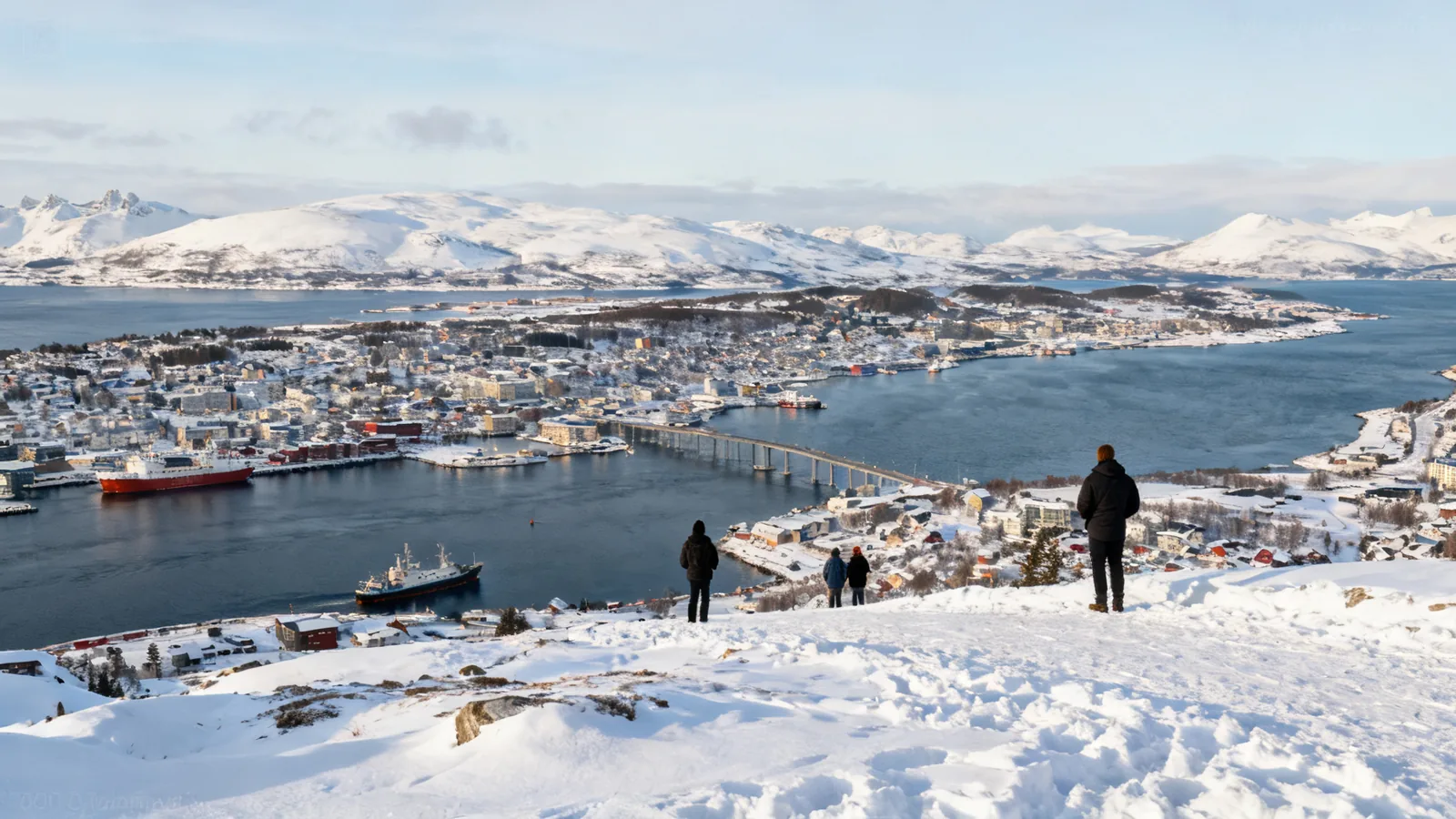
The short answer
January spans the return of the sun in Tromsø, so early and late stays have different light. Build daytime plans around your exact dates and keep aurora evenings dependent on weather. Winter activity names still need current snow, operation and access checks.
Last updated October 2026
What's covered20
- January daylight progression
- Climate and solar example
- Choose daytime activities with the evening in mind
- Dog sledding: choose the real format
- Reindeer visits and cultural content
- Wildlife trips and full-day commitments
- Aurora evenings in January
- Post-holiday opening checks
- January attraction status
- Arrival and accommodation
- Clothing for waiting, walking and travelling
- A workable January stay
- Forecast and disruption routine
- January booking checklist
- January questions
- Use the light example for a realistic day
- Separate a January sun-return trip from a wildlife trip
- Plan the next part of your trip
- Sources and checks
- Verdict
Tromsø in January is not one unchanging light condition. Early January has the polar-night setting. Daylight returns through the month. Choose the week’s daytime setting. Match it with the evening products you can confirm.
January spans the return of the sun in Tromsø, so early and late stays have different light. Build daytime plans around your exact dates and keep aurora evenings dependent on weather. Winter activity names still need current snow, operation and access checks.
For an aurora holiday, January offers a dark-season context rather than a promise of clear nights. The plan needs a usable arrival and rest. Each activity must also have current operation confirmed. A cold-looking calendar should not be used to guarantee a snow route.
January daylight progression
Visit Tromsø’s winter page describes returning light from mid-January. Terrain affects when the centre sees direct sun. Checked October 2026. That distinction explains why a modelled sunrise can precede direct sun reaching a given street.
Early January and late January therefore need different day plans. The mid-month figure below is only one dated reference, not a monthly average. Do not apply it to every day of a week-long stay.
Twilight is also useful light. A period without sunrise need not mean the city is pitch dark through the middle of the day. Use current conditions and openings to plan the day. The term polar night need not remove all daytime activities.
Climate and solar example
| Reference field | Value | Meaning |
|---|---|---|
| Monthly mean | -3 °C | Whole-month station normal |
| Mean daily high | -1 °C | Average daily maximum |
| Mean daily low | -5.3 °C | Average daily minimum |
| Precipitation | 108.3 mm | Water-equivalent monthly total |
| Solar interval, 2026-01-15 | 0h 47m | Sun above the modelled horizon |
Scroll for more →
January uses station TROMSO 01026, SN90450, at 100 m. The reference period is 1991–2020. They are retained in NOAA NCEI's primary station CSV. For sunlight, the example uses 15 January 2026 at 69.6536°N, 18.9367°E and MET Norway's event calculation. Checked October 2026; MET Norway data credit: CC BY 4.0.
The short solar interval is a flat-horizon calculation. It does not model mountains or sunlight entering a hotel room. A street-level view can differ, and the complement of that interval is not all usable aurora darkness.
Reading the winter background
January's mean temperature describes the whole month across the normal period. Averages of daily highs and lows do not define the range you will experience on an evening outdoors. Use the current forecast for your dates and the conditions of the excursion area.
Water-equivalent precipitation can include snow. It does not establish a sled trail's cover or the state of a pavement. The difference matters when booking a snow-dependent activity or choosing footwear for town.
The city station does not stand in for every camp or valley. If the operator travels inland or to another coastal setting, ask for its clothing guidance. The warmer indoor part of a product can need different clothing from the waiting period outside.
Choose daytime activities with the evening in mind
| Day choice | January purpose | Check before purchase | Effect on the evening |
|---|---|---|---|
| Dog sledding | A snow-based outing if conditions support it | Passenger/self-drive demands, ground cover and pickup | Can require rest before a late chase |
| Reindeer and Sami visit | Camp, cultural content and optional sled component | Exact inclusion and current sled conditions | Meal and return time affect tour preparation |
| Wildlife boat | A marine day if the current product fits | Departure area, complete duration and weather | A long sea day can be tiring before another outing |
| Town or indoor visit | A lower-transport day between outdoor bookings | Actual venue opening and route | Leaves flexibility for food and an evening departure |
Scroll for more →
This table does not confirm date-exact seats. It explains the fields needed to fit a daytime purchase into the rest of January travel.
Dog sledding: choose the real format
The dog-sledding guide compares supplier records for driving a sled and riding with a musher. Decide which experience you want before comparing the price. A passenger option and a self-drive option may have different demands.
Ask about the current ground conditions and how the supplier handles a changed route or cancelled ride. Historical January cold does not answer that operational question. Keep an alternative daytime plan if the activity cannot run.
Also check the journey to pickup. A central room may fit town pickup. An airport-area room can need another transfer. Do not reduce the total outing to only the time on the sled.
Reindeer visits and cultural content
Reindeer sledding and feeding choices need the camp programme. If learning from Sami hosts matters, compare the cultural programme. Feeding can add value alongside the ride.
The sled component still needs suitable snow and the current operator record. Ask what changes if it cannot proceed. A booking that includes a camp visit should not be described as identical to a ride-only experience.
For children or travellers with access needs, discuss the transfer vehicle, path and seating. A warm gathering space does not settle every part of the journey. Give the supplier an exact request rather than accepting a generic family-friendly label.
Wildlife trips and full-day commitments
Use the whale-season comparison for the departure and product checks. January alone does not establish wildlife location or presence. The current supplier's route and current record are the evidence for the outing you can buy.
Look at the full time from town pickup to return. If an outing travels to another port, that transfer belongs in the day's effort. Indoor shelter aboard is another exact field, not something proved by the vessel size in an image.
If a late aurora outing follows, consider whether that combination fits the group. After a long sea day, consider leaving the evening free. Another booking may fit better on a rested day.
Aurora evenings in January
January's dark-season setting permits viewing attempts under right conditions. Clear sky and natural activity still control what appears. No source cited here justifies a sighting rate for your week.
The Tromsø tour selector separates road chases from fixed camps. A road product handles its stated route and transport. A camp offers a fixed setting. Compare comfort, possible duration and the needs of each traveller.
For a boat, the evening cruise guide distinguishes a marine outing from an inland chase. Choose it for the boat experience and its shelter, not an assumption that moving on water solves cloud.
Ask about food timing. A tour with a snack may not replace a meal; a dinner product has a different sequence. Plan the preceding meal from what the product actually includes so that you are ready at pickup.
Photography and equipment
If photo lessons matters, find the named inclusion in the dated product. A gallery of aurora images does not show that a guide teaches camera settings or supplies a tripod. Ask whether images are delivered after the outing if that feature influences your choice.
Keep spare clothing and gear relevant to the product. A boat deck, fixed camp and road stop are different environments. The supplier's guidance should govern preparation rather than a generic list copied from another tour.
Post-holiday opening checks
The beginning of January can follow festive plans that differ from a usual week. Use the venue or supplier's dated record for the day. Do not assume a December event continues because its page remains indexed.
Start with meals on arrival and any early departures. Check breakfast against pickup. Check food after a late return too. A property amenity list is not a timetable.
For indoor attractions, check current opening and ticket details before travelling across town. The day's transport effort can be wasted if a seasonal or holiday exception applies. Keep a nearby alternative whose operation you have actually established.
January attraction status
The current Ice Domes notice makes winter 2026/27 unbookable. Checked October 2026. Read the status guide rather than relying on a historic January package description.
For Fjellheisen, current construction affects access and the operator states wheelchair access is not available during construction. Checked October 2026. That needs reviewing for the travel date rather than assuming a normal year-round route.
The cable-car guide separates the lower-station journey from the attraction itself. An unavailable access plan needs a suitable alternative. Do not improvise a winter mountain walk.
Arrival and accommodation
Choose the room from arrival transport and the pickups you will use. Tromsø hotel areas have different useful roles. A central room can reduce town transfer effort. An airport-area room may fit an early or late flight but needs the evening journey checked.
A rural or island stay adds another transport chain. If the trip plan includes city departures every day, ask whether their pickup boundaries include the property. Do not assume the hotel being marketed near Tromsø settles that issue.
For the flight day, use the airport arrival guide and the dated transport record. Schedule an activity only after accounting for baggage, room access and changing clothes. Ask the tour supplier about late-arrival terms if the components are separate.
Clothing for waiting, walking and travelling
Prepare for the different jobs clothing does during the day. Walking in town generates movement; waiting for the sky can mean standing still. A layer that feels warm on the way to pickup may be inadequate at a viewing stop.
Ask what thermal gear the tour supplies and in which sizes. Supplied boots or suits can be useful. But they apply to that product. You still need suitable clothing for the airport journey, independent evenings and the walks between town venues.
Footing matters as well as air temperature. Rain, snow or refreezing can affect the path to the bus. Choose footwear for current surfaces and your needs. January does not make every path firm snow.
Keep a dry change where the trip plan makes it useful. A room-based recovery period between wet outdoor time and a late departure can improve the plan. Leave gaps between the day’s outings. Each should allow time to change before the next.
A workable January stay
Short visit with one main activity
Choose the activity whose rules and tour date you can confirm, then let the remaining time support it. A town visit and one evening purchase can be a coherent plan without filling every morning. The journey home remains part of the final day.
If the arrival is uncertain, place the important excursion after a settled night. That is a margin for travel, not a guarantee of better sky. Read the terms before counting on rescheduling.
Longer city stay
Distribute demanding outings rather than stacking them. Plan a lighter day after a late road trip. Fit the order to the group’s sleep and access needs. Use return ranges from the product.
Keep an indoor or town-based alternative that suits the weather. Check its current operation and how to reach it. An alternative is useful only when it works during the week you are there.
Stay near the daylight transition
Use the date when planning scenery or photos. The sun's return changes the balance. But mountains can keep an exact location shaded. The mid-month calculation above should not be interpreted as a city-wide sunlight appointment.
For longer daylight, compare February before fixing the booking. For a polar-night and festive visit, December has a different set of plans.
Forecast and disruption routine
Consult Yr's Tromsø page close to departure and again for the outing. A tour outside town needs its relevant area assessed as well. The station normals cannot stand in for that forecast.
For buses, use Svipper with the correct date and both directions. For roads, the official traffic service is the current source. Avoid freezing a travel time from a clear-weather account into a winter plan.
Know the supplier's contact and cancellation process. A weather-related alteration, your own cancellation and a completed trip without aurora are different events. Their remedies should not be combined into one assumed refund rule.
January booking checklist
- Choose the part of the month from its light and the activities you want.
- Confirm the accommodation against airport and excursion transfers.
- Ask about the current ground requirements for each snow activity.
- Check holiday or seasonal exceptions for meals and venues.
- Leave rest after outings with a potentially late finish.
- Separate tour equipment from the clothing needed independently.
- Keep the actual product and terms supplied at purchase.
- Recheck operating notices nearer the journey.
January questions
Does the returning sun end aurora evenings?
The light changes through the month. But a dated evening still needs darkness and current conditions. A sunrise date alone cannot settle a tour's operation or result.
Is the climate table a guarantee of cold conditions?
No. It gives long-term background at one station. The current forecast and excursion area are the useful sources.
Can I add every winter activity to a short stay?
Compare transfers, physical demands and sleep. A fewer-activity plan can fit better than a sequence whose timings leave no rest.
Is an old Ice Domes package current evidence?
The attraction's new notice takes precedence for availability. Ask the organiser to clarify or revise its January programme.
Use the light example for a realistic day
The January solar example measures the interval above a flat horizon. A mountain or building can hide that sun from a particular street. Conversely, twilight can make a town outing useful outside the stated interval. Neither effect changes the station climate row. Treat light, cloud and ground conditions as separate checks.
For a guided daytime trip, ask which parts happen outdoors and when the group returns. A long journey can use much of the light interval before the main stop. Choose the outing for its full experience, with the current forecast and the supplier’s route in view.
Separate a January sun-return trip from a wildlife trip
Two visitors can book the same three January nights for quite different reasons. One may value the return of daytime light; another may want a long wildlife outing. Put that preference at the top of the schedule before trying to combine all the winter choices.
When the light transition is the main interest
Visit Tromsø's winter page explains returning light in January and the effect of surrounding terrain, checked October 2026. Choose the travel dates from that context, then ask about the setting of the daytime visit. A modelled solar event at the station does not mean the same direct sunlight reaches every place in town.
Leave arrival night for checking the next day's route and getting settled. Keep the first full day available for the daytime experience that prompted the holiday. Add an evening tour only when its pickup and return fit. The next day can be lighter, so a long night does not force an early outdoor start.
When the boat day takes priority
Start instead with the dated wildlife product and its complete travel block. Place it on a full day when there is no flight to catch afterwards. Ask where the return ends, because a central drop-off may still leave another journey to your room. Put the main viewing evening on the other full day if the boat day would leave too little rest.
The second night is not automatically an extra aurora purchase. You may prefer dinner and recovery after the marine day. Decide that before comparing apparently efficient packages. Buying every available slot can undermine the one experience you most wanted.
For either purpose, arrange clothing so that a wet outer layer from the day can dry before the evening. Ask the room provider what drying space is available. Check the outdoor supplier's equipment separately; a loaned suit on one activity cannot replace your own clothing for later town travel.
Finish the plan with the departure flight and its actual transfer. If the only remaining viewing slot is the last night, compare the possible return with the early start. Move the outing earlier or choose a different sequence when the gap is too short. January's changing light is useful context, but the workable purchase is the one that fits these particular three nights.
Plan the next part of your trip
Sources and checks
Facts checked: 14 October 2026.
- Visit Tromsø: winter progression: Returning-light and terrain context checked.
- MET station submission: January normals transcribed.
- MET solar method: January event calculation retained.
- Tromsø Ice Domes: Current winter booking status read.
- Fjellheisen: Construction access fields reviewed.
- Yr: city forecast: Date-specific weather source.
- Svipper: transport: Current journey-calendar source.
Verdict
Choose Tromsø in January from the light of your actual week and the winter activities you can verify. Plan transport and rest alongside late aurora evenings. Returning sunlight changes the daytime experience, while viewing and snow-based operation remain questions for current conditions.